

In brief
WordPress vs Strapi vs custom Laravel CMS, a practical comparison for businesses choosing a content management architecture.
The CMS landscape has split into two philosophies: traditional monolithic CMS (WordPress, Drupal) where the backend and frontend are tightly coupled, and headless CMS (Strapi, Contentful, Sanity) where the backend is a pure content API and the frontend is whatever you want. Here is how to choose.
Traditional CMS: WordPress and friends
WordPress powers 43% of all websites. It is mature, has a massive plugin ecosystem and can be set up in hours.
Strengths:
- Quick to launch, themes and plugins cover most use cases.
- Non-technical users can manage content easily with the block editor.
- Huge community, every problem has been solved and documented.
- Low initial cost, cheap hosting, free themes/plugins.
Weaknesses:
- Performance degrades with plugins, every plugin adds database queries and JavaScript.
- Security, WordPress is the most targeted CMS by attackers. Keeping core, themes and plugins updated is a constant task.
- The WordPress way or the highway, customising beyond what plugins allow means fighting the platform.
- PHP-heavy rendering, modern JavaScript frameworks integrate awkwardly.
Headless CMS: Content API + custom frontend
A headless CMS (Strapi, Contentful, Sanity, Directus) provides a content management backend with a REST or GraphQL API. You build the frontend in React, Vue, Next.js or whatever you want.
Strengths:
- Complete frontend freedom: use React, Vue, Svelte, static site generators, mobile apps, even desktop apps.
- Better performance, the frontend is a static site or SPA, served from a CDN.
- Omnichannel, same content API serves website, mobile app and any other channel.
- Better developer experience, modern tech stack, no legacy PHP code to navigate.
Weaknesses:
- More complex to set up. You need separate hosting for CMS and frontend.
- Content preview can be tricky, live preview of drafts requires extra work.
- Higher initial cost, more development hours than a WordPress setup.
- Non-technical users may struggle with the separation of content and presentation.
The Laravel custom CMS: Best of both worlds
A custom CMS built with Laravel (like TFast Digital Agency's platform) gives you:
- Full control: every content type, every field, every relationship is purpose-built for your business.
- Modern stack: Laravel backend + React/Inertia.js frontend. Fast, secure, maintainable.
- Admin panel that fits: not a generic WordPress dashboard with a dozen unrelated menu items. Your team sees exactly what they need.
- API-first when needed: expose content via REST API for mobile apps or external consumers.
- No plugin dependency: every feature is written for your site, not a generic plugin that does 80 things you do not need.
The decision framework
- Simple blog or brochure site? WordPress is fine. But a custom Laravel site costs only slightly more and gives you a much cleaner, faster, more secure result.
- E-commerce? Neither WordPress (WooCommerce becomes a maintenance burden at scale) nor pure headless (too much custom work for cart/checkout). A custom Laravel build is the sweet spot.
- Complex content model? (e.g. multiple content types with relationships, multi-language, granular permissions). Custom Laravel CMS wins decisively.
- Need a mobile app consuming the same content? Headless or custom Laravel API. Not WordPress.
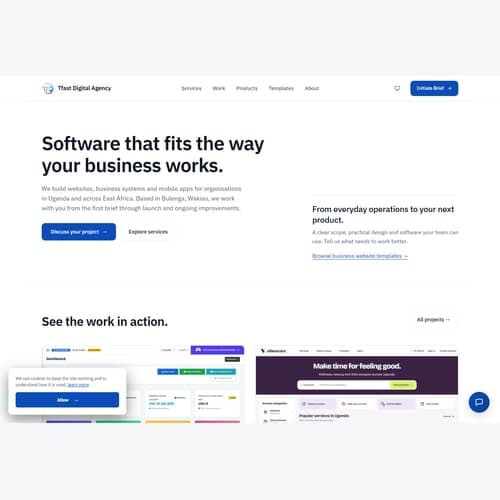
TFast Digital Agency builds custom content management systems on Laravel that give you complete control over your content, blazing-fast performance and an admin panel your team will actually enjoy using.
<!-- SEO keyword optimization: headless cms vs traditional cms -->Focusing on headless cms vs traditional cms is essential for modern business success.