


In brief
Most ERP systems are overkill for African SMEs. Learn which modules you actually need, how to phase implementation and when custom beats generic.
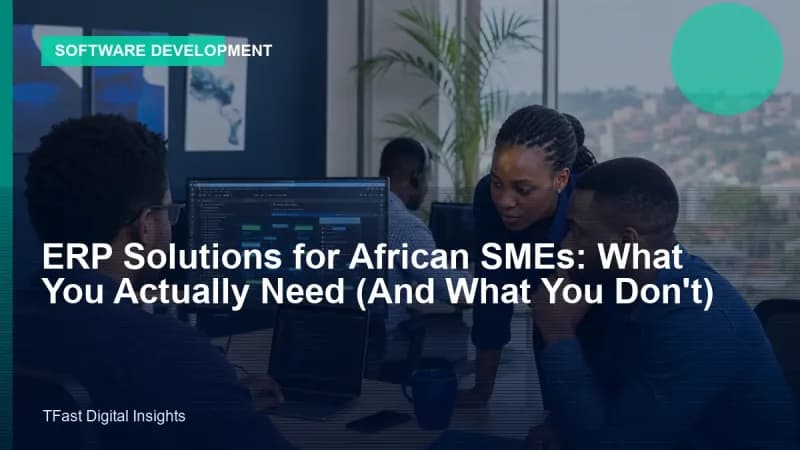
ERP (Enterprise Resource Planning) software promises to unify your entire business (finance, inventory, HR, sales, procurement) in one system. The promise is real. But most ERP systems were built for multinational corporations, not for a growing Ugandan business with 30 employees and unique local requirements.
What modules do you actually need?
An SME does not need all 47 modules of SAP or Oracle. Start with these core four:
- Finance & Accounting: general ledger, accounts payable/receivable, bank reconciliation, financial statements. This is the non-negotiable foundation.
- Inventory & Procurement: stock tracking, purchase orders, supplier management, reorder automation. If you sell physical goods, this is #2.
- Sales & CRM: customer database, sales pipeline, quotations, invoicing. Turns your customer relationships into manageable data.
- HR & Payroll: employee records, attendance, leave management and payroll processing with local tax compliance (PAYE, NSSF, LST).
Everything else (manufacturing, supply chain, advanced analytics) can wait until these four are running smoothly.
The African ERP reality
Generic ERPs fail in African markets for predictable reasons:
- Tax compliance: PAYE brackets, NSSF rates, VAT rules and local reporting formats differ from US/European norms.
- Mobile money: no global ERP handles MTN and Airtel payments natively. You end up with manual reconciliation anyway.
- Offline requirements: branches in areas with unreliable internet need local functionality that syncs when connected.
- Cost: SAP Business One starts at $3,000+/user/year. For a 20-person company, that is $60,000/year on software alone.
The custom ERP advantage
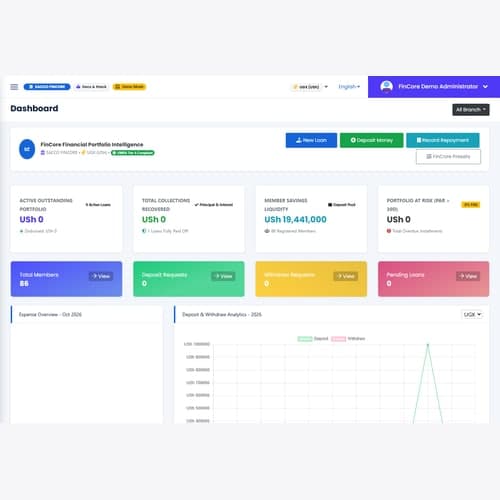
A custom ERP built by TFast Digital Agency starts with exactly the modules you need, no more, no less. It handles your local tax rules, your mobile money integration and your specific workflows. It works offline at branches and syncs to head office. And you own it, no per-user annual fees.
Phased implementation
Do not try to launch all modules at once. Phase 1: Finance + Inventory (months 1–3). Phase 2: Sales/CRM (months 4–5). Phase 3: HR/Payroll (months 6–7). Each phase goes live, stabilises and builds team confidence before the next one starts. After 7 months, you have a complete ERP, built for your business, not a generic template.
TFast Digital Agency builds custom ERP systems for African SMEs: finance, inventory, sales, HR and payroll, integrated with local payment systems and tax compliance. Start with what you need today, grow as your business grows.
<!-- SEO keyword optimization: erp solutions african sme -->Focusing on erp solutions african sme is essential for modern business success.